
16 أبريل 2025
A Clean Industrial Future Starts with Circular Thinking: How ASPIRE Supports the Clean Industrial Deal
مدونات أسباير
The industrial sector is undergoing a profound transformation. Driven by climate urgency, rising material costs, and shifting regulations, industries across Europe and beyond are being called to decarbonise, digitise, and become more resource-efficient. The European Union’s Clean Industrial Deal sets an ambitious framework to guide this shift, aiming to ensure that heavy industries like steel, cement, chemicals, and manufacturing can become global leaders in sustainability, resilience, and competitiveness.
At ASPIRE, we welcome this direction. We believe that the Clean Industrial Deal represents more than just a climate commitment—it’s an opportunity to redesign how industries operate, unlocking value through the smarter use of energy and materials. While much attention is (rightly) focused on energy efficiency and electrification, an equally important piece of the puzzle is often overlooked: the circular economy.
That’s where ASPIRE comes in.
What is the Clean Industrial Deal?
The Clean Industrial Deal is a policy and investment strategy aligned with the European Green Deal. It aims to decarbonise heavy industry while strengthening economic resilience, creating green jobs, and boosting the EU’s industrial competitiveness. Central to the Deal are actions such as:
-
Electrifying industrial processes using clean energy
-
Enhancing energy and resource efficiency
-
Supporting the deployment of low-carbon technologies
-
Strengthening circular value chains
-
Encouraging cross-sector collaboration
It recognises that achieving net zero is not just about switching energy sources—it’s also about rethinking materials, processes, and systems.
ABB’s Role: Energy Efficiency and Digitalisation
Technology leaders like ABB are playing a key role in advancing this agenda. Through intelligent electrification, automation, and digitalisation, ABB is helping industries decarbonise hard-to-abate sectors. Their systems enable industrial plants to track emissions, reduce energy use, and switch from fossil fuels to renewables. These innovations are crucial for tackling Scope 1 and 2 emissions generated directly from operations or purchased energy.
However, to fully deliver on the Clean Industrial Deal’s goals, industries must also address Scope 3 emissions—emissions embedded in the value chain, especially from the extraction, use, and disposal of materials.
This is the space where ASPIRE delivers value.
ASPIRE’s Mission: Industrial Symbiosis for Circular Outcomes
ASPIRE is an award-winning digital platform that enables industrial symbiosis—a model where the waste or by-product of one business becomes the input for another. In doing so, we help manufacturers, construction firms, councils, and supply chain actors reduce waste, cut emissions, and increase resource productivity.
Imagine a construction company with leftover bricks, timber, or insulation materials. Instead of sending these to landfills, they list them on ASPIRE, where another builder, artist, or small manufacturer can claim and reuse them. Or think of a metal fabrication workshop with excess offcuts—these can be picked up by a local design studio or engineering firm. What was once waste becomes a resource.
This kind of circular matchmaking is more than good business—it’s essential climate action. Reusing materials avoids emissions from extracting and processing virgin resources, reducing the industrial sector’s total carbon footprint.
Complementing Clean Energy with Clean Materials
The Clean Industrial Deal rightly emphasises the decarbonisation of energy systems. But focusing solely on energy is not enough. According to the Ellen MacArthur Foundation, 45% of emissions come from making and using products and food. That means even if we switched to 100% renewable energy tomorrow, we’d still have nearly half the emissions to address.
ASPIRE complements clean energy efforts by tackling the materials challenge. Our platform helps companies:
-
Extend the life of materials by finding new users for offcuts, surplus, or imperfect stock
-
Reduce demand for virgin materials, decreasing upstream emissions.
-
Divert waste from landfills, cutting methane emissions and waste management costs
-
Build local resilience by enabling supply chain collaboration and material security
By integrating ASPIRE’s circular economy tools into their sustainability strategies, businesses are moving closer to the Clean Industrial Deal’s vision of a clean, efficient, and competitive industry.
Digital Tools for Circular Value Chains
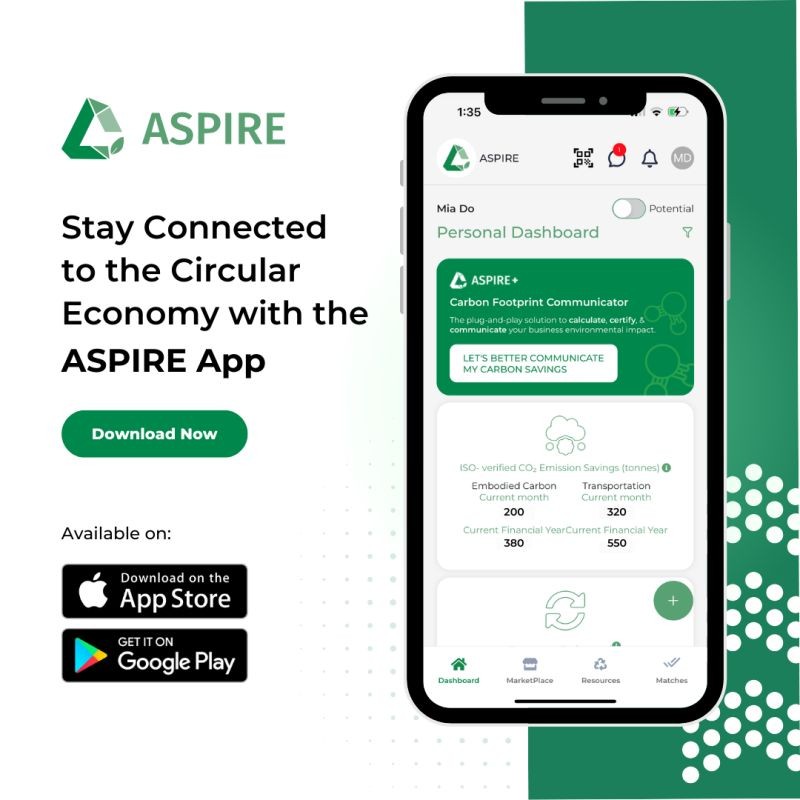
Like ABB uses digital systems to optimise energy usage, ASPIRE uses smart data to improve material efficiency. Our platform enables real-time resource tracking, community insights, and impact reporting. Members can measure their carbon savings, track material flows, and demonstrate their contributions to ESG goals.
This visibility is essential in today’s market. Investors, regulators, and customers are demanding transparency and action on sustainability. With ASPIRE, businesses can show not just intent but measurable outcomes. Our digital infrastructure provides the intelligence needed to scale circular practices across regions and sectors.