Building a Sustainable Future: Decarbonising Urban Construction
ASPIRE Blogs
Imagine living in a city where every building contributes to a healthier planet. This isn’t a distant dream but a rapidly approaching reality. With a new urban area the size of Paris being constructed every week, the urgent need to decarbonise construction has never been clearer. This challenge is especially pressing in emerging market nations, where urban populations are booming. Buildings emit around 18 billion tonnes of CO2e annually—one-third of all man-made greenhouse gas emissions. Innovative solutions are essential to build sustainably and combat climate change as cities expand.
Turning Cities into Carbon Stores
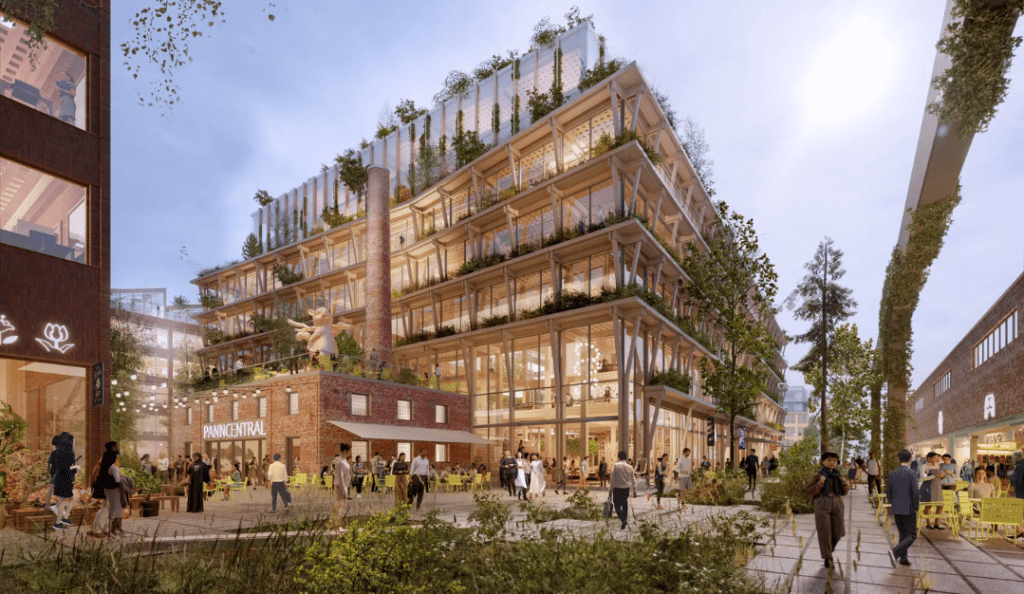
Photo from Business Insider (Atrium Ljungberg/Henning Larsen)
Take a moment to picture ‘Wood City’ in Stockholm, set to break ground in 2025. This ambitious project, touted as the world’s largest wooden city, will span 250,000 square meters of homes, offices, and retail spaces. It will use more laminated timber (LT) than any previous project. LT, made from layers of wood bonded with moisture-resistant glue, is light, strong, and surprisingly resistant to fire. More importantly, it can be carbon-negative if sourced sustainably, storing more carbon than it emits during production. This innovative material could play a significant role in reducing the carbon footprint of our future cities.
Building for Reuse
Imagine living in a city where every building contributes to a healthier planet. This isn’t a distant dream but a rapidly approaching reality. With a new urban area the size of Paris being constructed every week, the urgent need to decarbonise construction has never been clearer. This challenge is especially pressing in emerging market nations, where urban populations are booming. Buildings emit around 18 billion tonnes of CO2e annually—one-third of all man-made greenhouse gas emissions. Innovative solutions are essential to build sustainably and combat climate change as cities expand.
Decarbonising Concrete and Steel
Although we embrace innovative materials like LT and bamboo, traditional materials like concrete and steel remain essential. Fortunately, efforts to decarbonise these materials are gaining momentum. British start-up Seratech, for example, is pioneering cement production using waste CO2 emissions, aiming for ‘net zero concrete at scale.’ Meanwhile, researchers are exploring using green hydrogen to produce zero-emission steel. These advancements bring us closer to a future where concrete and steel contribute to sustainability rather than detract.
Regulations and Investment Opportunities
New regulations are bolstering the push for sustainable construction. In New York, ‘Buy Clean Concrete’ rules set emissions limits for state-funded projects. Similar regulations are emerging globally, including the EU’s mandate for 70% of construction waste to be reused or recycled. For investors, this regulatory shift presents risks and opportunities in an industry worth nearly USD 10 trillion annually. Embracing low-carbon materials and digital solutions like Digital Product Passports can position investors to thrive in this evolving landscape.
Building for Reuse A Sustainable Urban Future
Imagine a world where nearly 70% of the population lives in vibrant, sustainable cities by 2050. As we build this urban future, every choice we make—from the materials we use to the way we design our buildings—has the potential to positively impact our planet. By prioritising sustainability, we can create cities that are livable and play a crucial role in mitigating climate change.
Join us in this journey toward a sustainable urban future. Sign up for our newsletter to stay informed with our latest insights and developments in sustainable construction. We can rethink sustainability and build a better world for future generations.
Feel free to connect with us if you want more information about our projects or to discuss how you can be part of this exciting journey towards sustainable urban development. Let’s build a future we’re proud to live in!